Belimbingsari is a village with a considerable history because during the Dutch colonial period a joint effort was made to preserve certain Balinese cultural ways. As far as the Dutch were concerned, Catholic and Protestant missionaries did not belong in such an image. Initially, all missionaries were forbidden to spread their ideas on the island, but in the early 1930s a very small Christian community began to emerge.
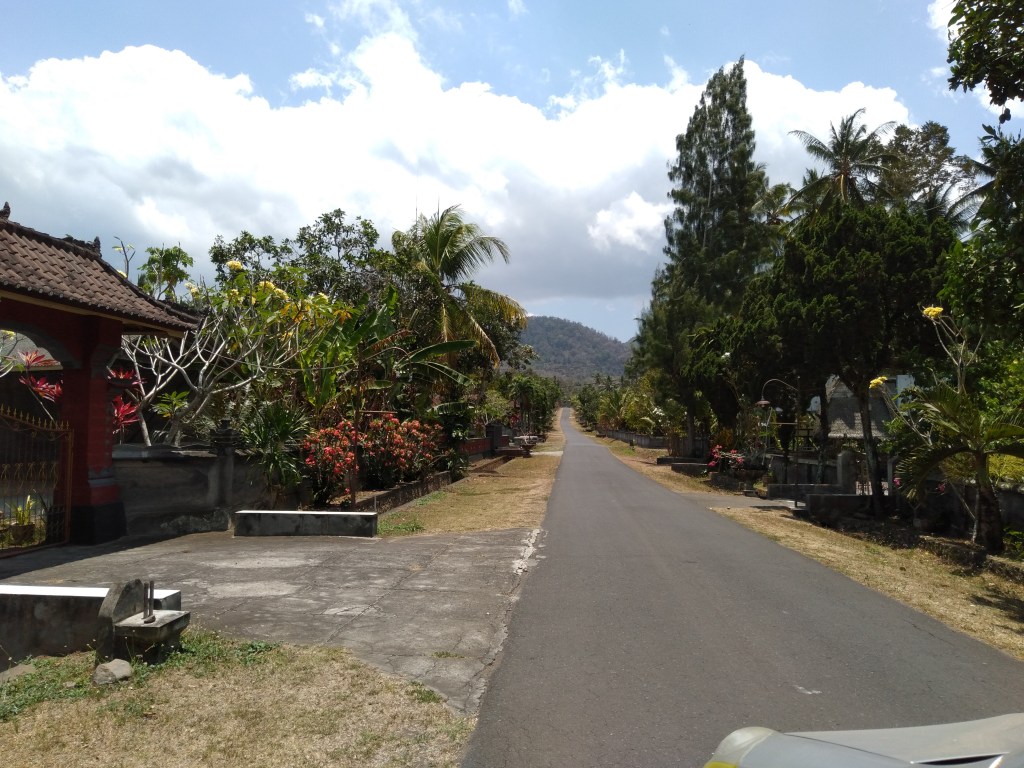
Nothing is impossible for God that is what the founders of Belimbingsari believed when they were exiled to western Bali and settled in a spooky and untamed jungle in 1939. Against all odds, what was once considered an uninhabitable and deadly jungle became the permanent settlement for Balinese Christians, Belimbingsari, with numerous houses and a 20-hectare church that is decorated with the architectural character of Bali. It is a beautifully arranged and clean village and from the moment you enter the village you see clean maintained grass verges, concrete flower pots every 50 meters and on each driveway to every house, everything looks so orderly and the people are clearly proud of their village.

The church was rebuilt after a devastating earthquake in 1973, to look like a Balinese temple, nicknamed “Pura Gereja” or the temple of the church, and is now seen as one of the most unique churches in the world. This church is in the centre of the village of Belimbingsari, which can easily be seen as a temple, were it not for a number of crosses on the roof.
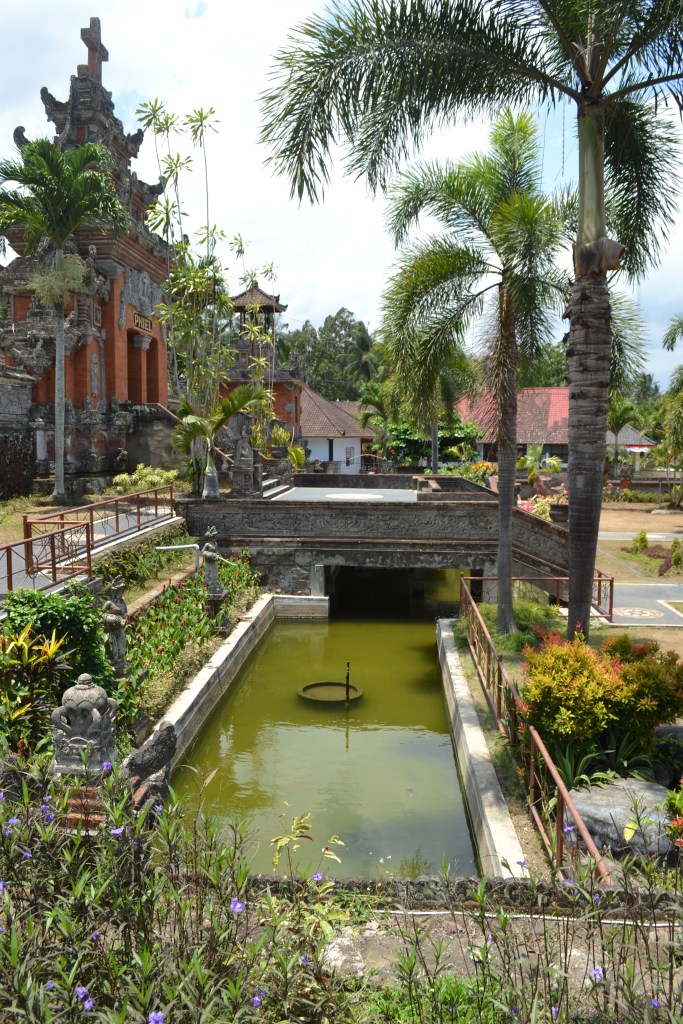
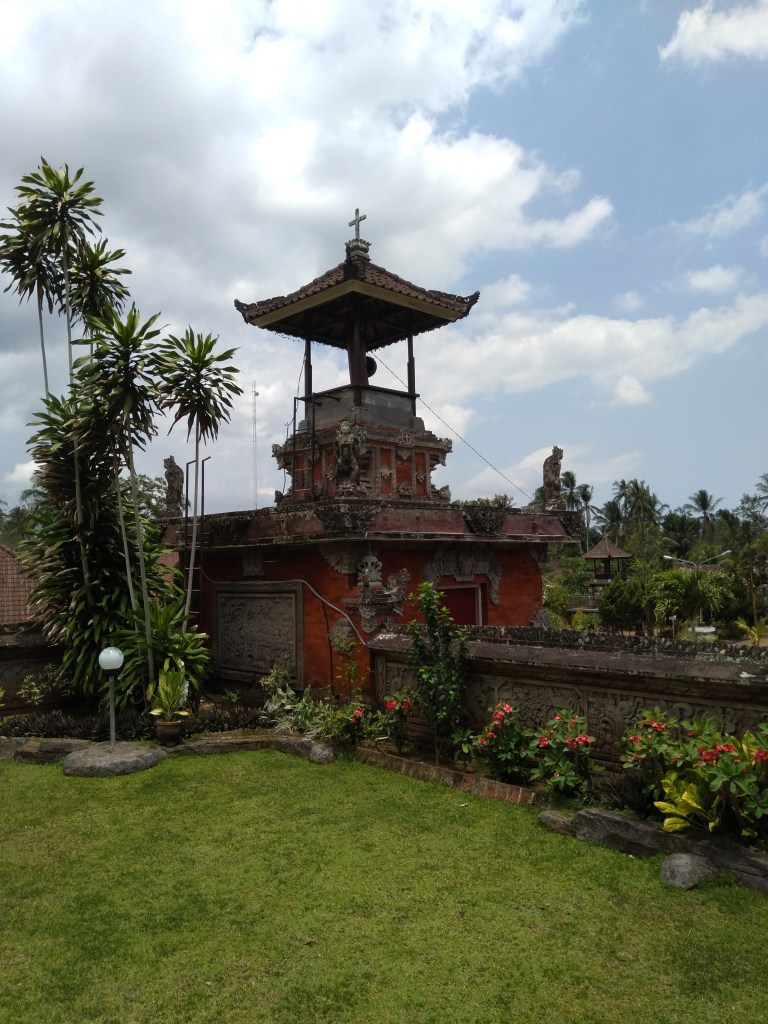
It is a special church, because it is completely open. Through the main gate, in Balinese style, you enter the inner area, this gate is only open on Sundays for the church service.
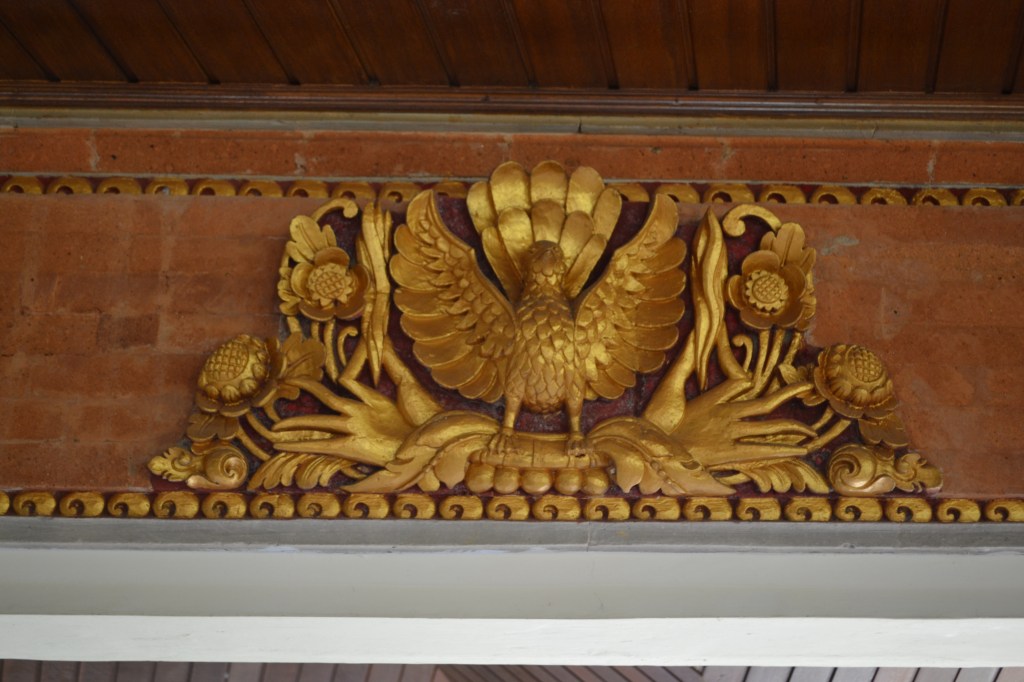
There is no church tower or bell, there is a kind of bell which is also used in the Hindu temple (kulkul) to let people know that there is a ceremony or a gathering. Furthermore, many things are the same as in other Protestant churches, a high roof, a pulpit, and the Greek characters Alpha and Omega. Also the sculptures in Balinese style are there only what it portrays is based on the Protestant faith.

There is also an orphanage attached to the church, which is a bit down the road and it was very impressive. The lady who showed us around told us that she was a full-time mother for the children, at the time, there were 69 children (the youngest 2 months and the oldest 17 years) some of them still have parents but they are not able to take care of them, and some really have no parents, there are 12 counsellors, 11 part-time and 1 full-time. It all looked very organized, and the children, despite all their misery, seemed very cheerful and were happy with our visit.


 Rundung #Megae